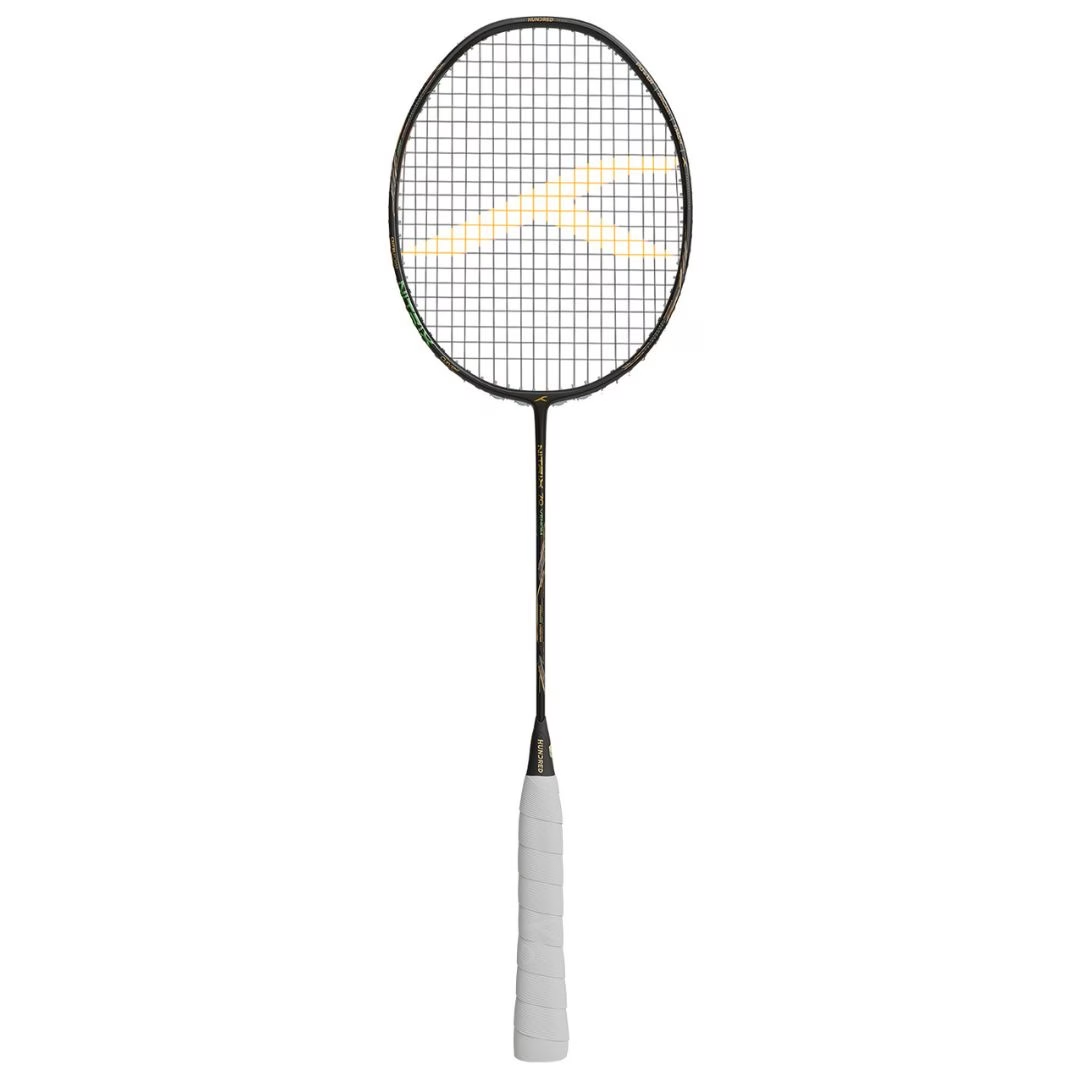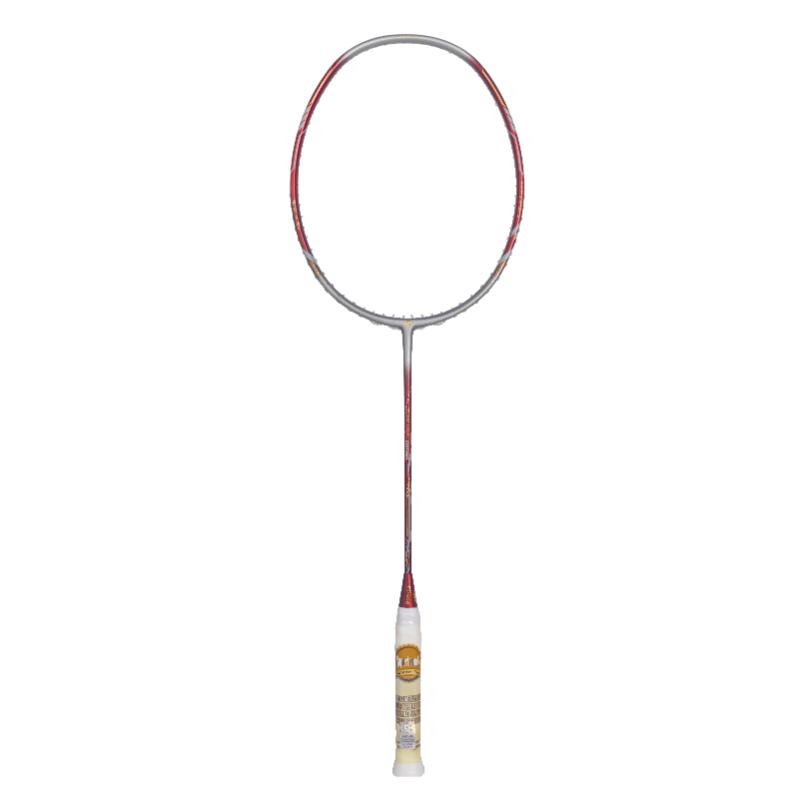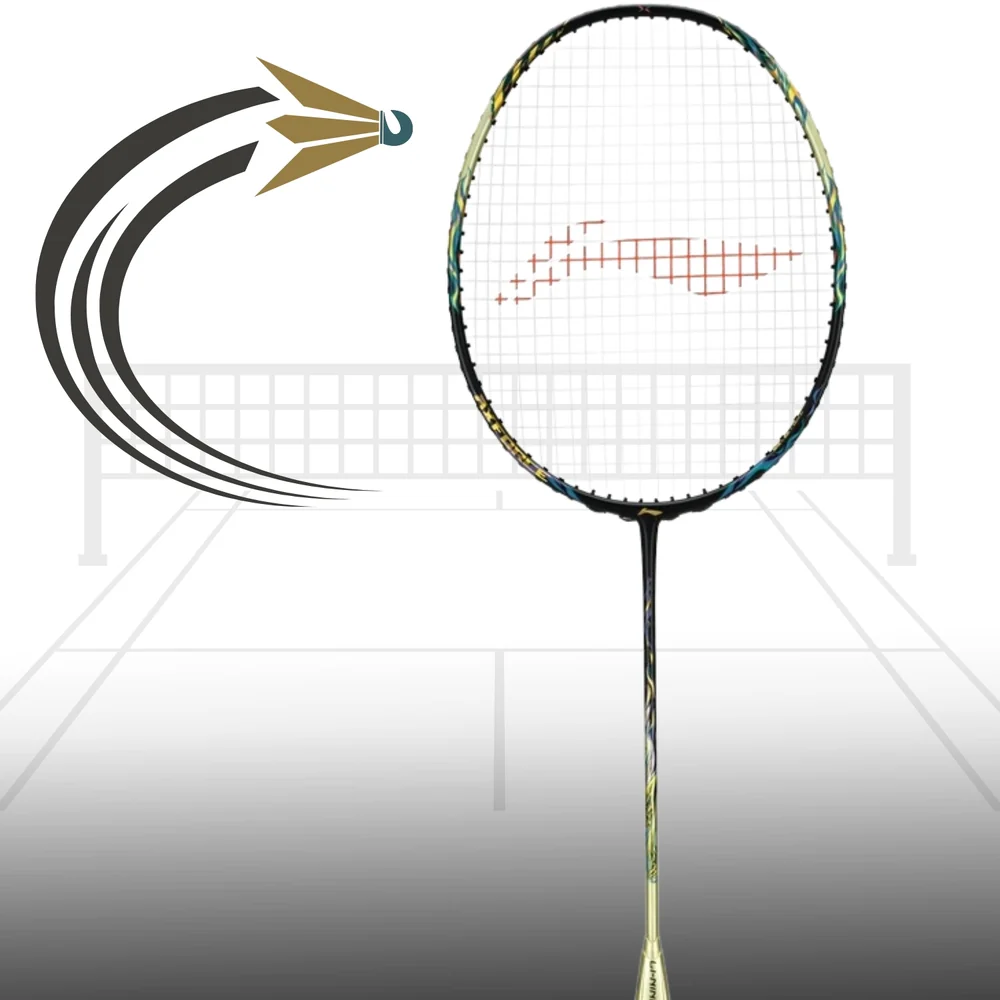
Li-Ning has been the Chinese national badminton team’s kit sponsor for over a decade and has partnered with the BWF on major tournaments since 2013, so its racket range spans from beginner training frames to the same construction tier its sponsored players compete with. The model names change every season; the engineering ideas behind them mostly do not.
Weight class decides more than the number suggests
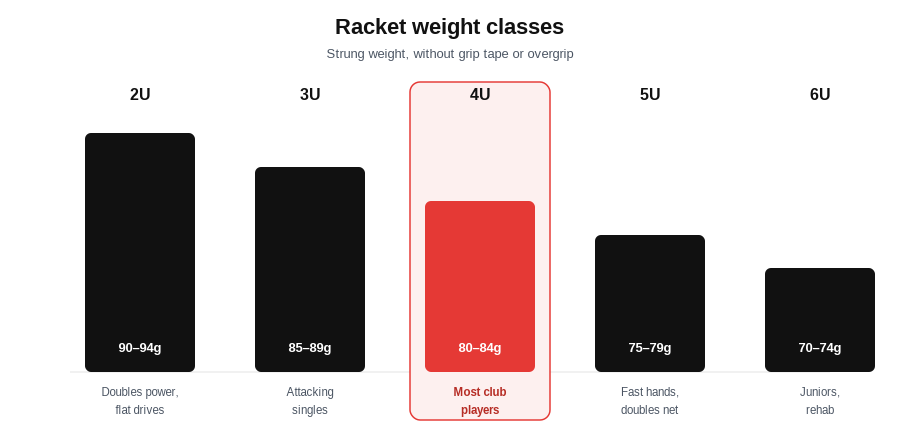
A racket’s weight class — stamped as 2U through 6U — is the single biggest factor in how it feels, bigger than the frame shape or the marketing name on the throat. Heavier classes carry more mass into contact and hit harder for the same swing effort; lighter classes swing faster and recover into position sooner, which matters more in doubles and at the net than raw power ever does.
- 2U — 90–94g, doubles power and flat drives
- 3U — 85–89g, the common attacking-singles weight
- 4U — 80–84g, the default most club players settle on
- 5U — 75–79g, fast hands and quick doubles net play
- 6U — 70–74g, juniors or players easing back after injury
Balance and shaft flex, the two numbers under the weight
A head-heavy balance point puts more mass out toward the string bed, which is what generates smash power from a full swing — it is the balance behind Li-Ning’s Axforce line, built for players who finish points from the rear court. An even balance splits the weight between head and handle for all-round play, and a head-light balance moves mass toward the handle for faster reactions at the net and in fast doubles exchanges.
Shaft flex works alongside balance rather than against it. A stiffer shaft demands a fuller, more committed swing to load properly but returns more energy on a clean hit, which is why a stiff shaft is usually paired with a head-heavy frame rather than fighting it. A more flexible shaft loads with less effort and suits a player still building swing speed and timing.
What the frame technology is actually doing
Li-Ning rackets are built around what the brand calls a Dynamic Optimum Frame — aerodynamic and rounded near the top of the head, squaring off toward a box shape at the T-joint where the head meets the shaft. The rounded top cuts air resistance through the swing; the boxier base resists twisting on an off-centre hit, so the frame stays fast without going unstable the moment a shot lands slightly off the sweet spot.
Higher-tier frames add a slimmer shaft profile — figures around 6.6–6.8mm are common on the Axforce range — built from graphite or a higher-grade carbon composite. A thinner shaft flexes more predictably along its length, which is part of why premium frames feel more precise than entry ones even at the same declared weight and flex rating.
Putting weight, balance and flex together
The mistake most players make is choosing on weight alone, when weight, balance and flex only mean something in combination — an 85g head-heavy stiff frame and an 85g even-balance flexible one are barely the same sport to swing. The three numbers are worth reading as one decision, not three separate ones.
- Attacking back-court singles player, established technique: 3U, head-heavy, stiff flex — the classic Axforce-style setup, rewarding a full committed swing with real smash pace
- Club all-rounder who plays both singles and doubles: 4U, even balance, medium flex — the frame that does nothing badly rather than one thing brilliantly
- Doubles specialist, fast net exchanges and quick blocks: 5U, head-light to even, medium-to-flexible shaft — speed to the net and back over raw power
- Beginner or intermediate still building a full swing: 4U or 5U, head-heavy, flexible shaft — the frame mass supplies power the swing does not yet, without punishing a mistimed hit
- Coming back from a wrist or elbow niggle: 6U, whatever balance felt comfortable before — lighter overall load matters more here than any other spec on the sheet
Questions
- Is a lighter racket always easier to play with?
- Not necessarily. A lighter racket swings faster but generates less power on its own, so a beginner sometimes finds a mid-weight, head-heavy frame more forgiving because the mass does some of the work for an underdeveloped swing.
- What does the grip size letter mean?
- G2 through G5 describes handle circumference, with G5 the smallest. A grip that is too large restricts wrist snap on the smash; too small and the racket can twist in a sweaty hand.
- Should weight, balance or flex be chosen first?
- Weight first — it is the easiest to feel the difference between in a shop, and it sets a ceiling on how head-heavy a frame will feel comfortable. Balance and flex are then a matter of matching to how committed and fast your swing already is, not the other way round.