Badminton is one of the more sweat-intensive racket sports — matches run long, indoors, with almost no natural breeze — so fabric technology matters more here than in most other sportswear categories, and Li-Ning has built two named systems specifically around managing that.
AT DRY: moving moisture away from the skin
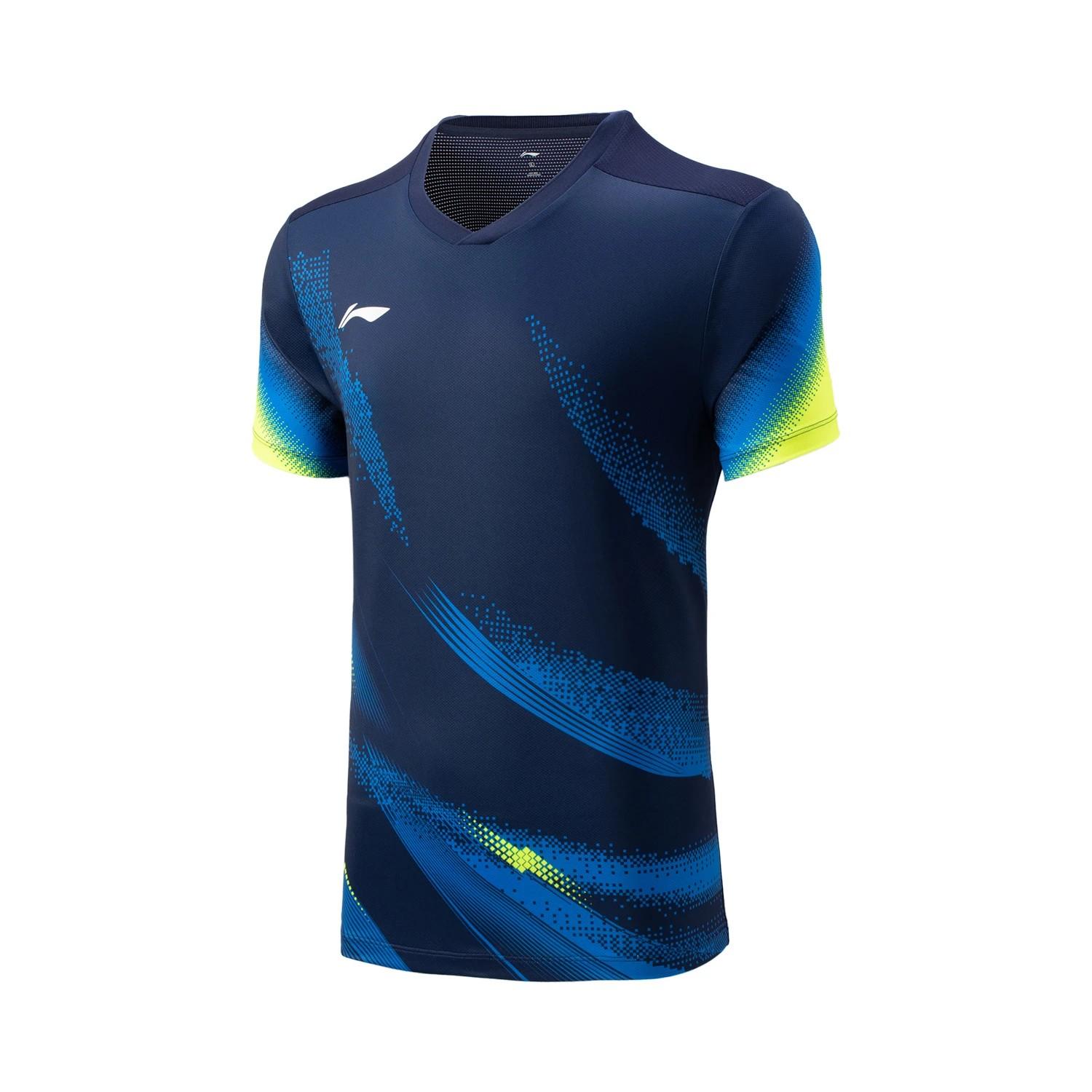
AT DRY is Li-Ning’s core moisture-management fabric technology, built to draw sweat away from the skin and spread it across a wider surface area of the fabric so it evaporates faster than it would pooling in one spot. It is typically built into 100% polyester weaves and is the technology most commonly named on Li-Ning’s standard competition and training tees.
LN FAST DRY: a step further, using fibre cross-section
LN FAST DRY goes a level deeper into the fabric’s construction, using specially shaped cross-section fibres engineered to intelligently accelerate the evaporation of sweat and body moisture rather than simply wicking it to the surface. A stated advantage is that the effect holds up over repeated washes — a real durability consideration for kit that gets washed after nearly every session.
Why this matters more for badminton specifically
A badminton match can run 45 minutes to well over an hour indoors, with no wind and often limited air conditioning at club level, so a shirt that traps moisture gets heavier and colder against the skin as the match goes on — genuinely affecting movement, not just comfort. Fabric technology built for evaporation rather than just wicking is a real, measurable difference across a long match, not a marketing distinction.
Is the fabric technology actually worth paying more for
For anyone playing one casual game a week, a plain cotton-blend tee is fine — the moisture problem only really bites once a session runs past thirty or forty minutes of continuous rallying, which a single social match rarely does. The calculation flips for anyone training regularly or playing back-to-back matches at a tournament, where a heavy, sweat-soaked shirt by the second game is a genuine handicap and not just a comfort complaint — cold, wet fabric clinging to the skin measurably restricts the free arm movement a smash and an overhead clear both depend on.
The practical test in a shop is simple: scrunch the fabric in a fist for a few seconds and let go. A genuine moisture-management weave springs back to shape almost immediately and feels slightly textured rather than smooth; a plain print-shop polyester tee tends to stay creased and feels closer to a plastic sheen. It is not a perfect test, but it catches the obvious difference before a single sweat-drenched session does.